A Bowl for Serving or Display: Reading Two Kinds of Use
Learn how to tell a serving bowl from a display bowl by reading its shape, surface and setting, then choose care that suits its intended use.
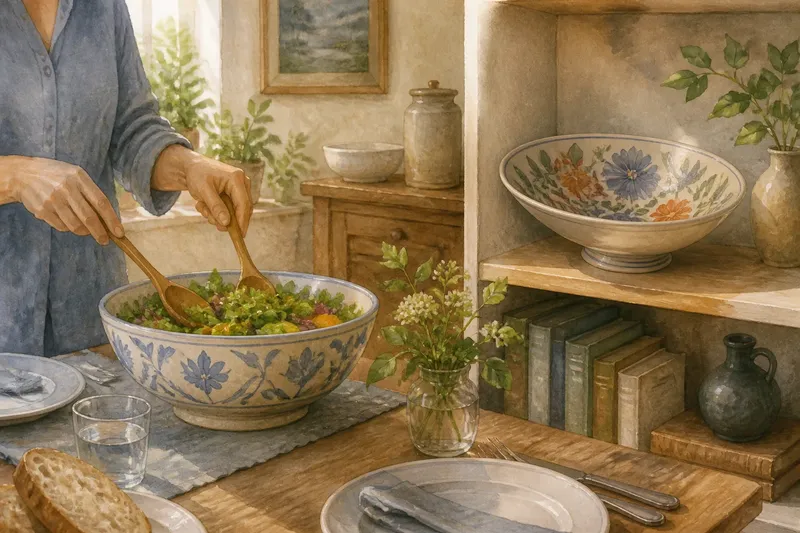
Is that bowl meant for the table, or is it better left on a shelf? To tell a serving bowl from a display bowl, look at how its form, finish and placement work together. A broad rim may invite a spoon; a delicate painted interior may ask you to look rather than ladle. Neither clue settles the matter alone, but together they reveal what kind of attention the object expects.
What makes a bowl a serving bowl?
A serving bowl is designed to hold food and make it easy to share. Its shape usually supports practical handling: an opening wide enough for a serving spoon, a stable base, and a rim that helps guide food back into the vessel. Some have handles or a foot that lifts the contents for passing around the table. These features need not be conspicuous; a plain, sturdy bowl can be more serviceable than one with elaborate decoration.
Consider what goes into it. A deep bowl suits loose foods such as salad leaves or noodles, while a shallow, wide form can make fruit or bread easy to reach. The bowl’s size and weight matter in relation to how it will be carried and where it will sit. A vessel that feels graceful when empty may become awkward once filled, so serving design often favours a secure grip and a dependable base.
Surface treatment offers another clue. A smooth, glazed interior is generally easier to wipe clean than a rough or deeply textured one. Decoration may be concentrated on the outside, where it remains visible without making the food-contact surface harder to clean. Yet a decorative bowl can still be intended for serving; ornament and use are not opposites.
What makes a bowl a display bowl?
A display bowl is arranged primarily to be seen. Its profile, colour, material or surface detail may reward close looking, and the object may be positioned so its inside or underside remains visible. A narrow foot, an unusual rim or a sculptural silhouette can give the bowl presence on a mantel or cabinet, even if those features would be inconvenient at a crowded meal.
Display does not mean useless. The bowl might hold potpourri, keys or a small arrangement, or it may remain empty because the maker’s decoration is the point. Some pieces are made to be handled and admired; others are fragile, unstable or finished in a way that makes food use unsuitable. A maker’s mark, care note or product description can help distinguish these possibilities.
Look for what the design asks you to notice. A painted scene inside the bowl may be hidden as soon as it is filled. A pierced or openwork form may cast an attractive shadow but allow liquid to escape. A highly reflective surface might be most effective under a lamp rather than at the centre of a dinner table. These details suggest where the object belongs and how it is meant to be encountered.
Which details reveal the bowl’s intended use?
No single feature is a reliable verdict. Read the bowl as a set of choices: its proportions, finish, balance, decoration and the way it sits in a room. A broad, accessible opening leans towards serving; delicate raised elements or a base that wobbles on a table lean towards display. Compare the design with the task rather than relying on labels such as “decorative” or “functional”.
Imagine you inherit a wide ceramic bowl with painted flowers inside and a smooth, flat base. The shape could suit fruit, but the interior artwork would be obscured by a full serving. You might place it on a sideboard as a focal object, or use it for dry fruit when the decoration can still be seen. If the maker’s care information confirms food use, that choice is more informed; absent such guidance, keep food use conservative.
Context adds evidence, but it is not proof. A bowl displayed in a cabinet may be a prized serving piece, while a simple bowl on a dining table may be there for practical reasons. In a shop, ask whether the object is sold for food contact and what cleaning it can tolerate. At home, notice whether it is easy to lift, pass and clean, or whether it seems happiest undisturbed.
How should serving and display bowls be placed?
Place a serving bowl where its shape works for the people using it. A wide opening needs enough clear space for a spoon and for hands to reach without knocking neighbouring dishes. A heavy bowl may suit a stable central surface, while a lighter one can be easier to pass. Keep the most useful side accessible: handles should not point into a crowded path, and decoration intended to be seen should face the room.
For display, give the bowl room around its outline. A sculptural rim can disappear against a busy shelf, while a dark finish may stand out against a pale wall. A cabinet or open shelf can protect a delicate piece from casual knocks, and a low, stable position reduces the temptation to stretch or tug at it. Avoid placing it where sunlight or heat could affect its colour or material; the maker’s guidance can clarify any particular sensitivity.
What is not worth the effort? There is little value in rearranging an entire room to make a bowl look as if it belongs in a formal display. A clear, stable spot with enough visual breathing room is usually more useful than an elaborate stand that obscures the object or makes it precarious.
How should each kind of bowl be cleaned and stored?
For a serving bowl, clean promptly after use, especially if food is acidic, oily or strongly coloured. Use a soft cloth or sponge and avoid abrasive pads on painted, metallic or easily scratched finishes. Let the bowl dry fully before stacking it, and place a soft cloth between nested pieces if their surfaces might rub. A bowl that cannot be washed safely may be better reserved for display than pressed into regular service.
Display bowls need care too, though the task is often dusting rather than washing. Lift the object with both hands rather than pulling it by a thin rim or handle. A soft brush can reach crevices; a slightly damp cloth may suit a robust, washable surface, but moisture is a poor choice for materials or finishes that can absorb it. Keep the bowl on a level shelf and avoid stacking objects inside it unless its surface and shape can take the contact.
Care varies with material and finish. Ceramic, glass, wood and metal respond differently to water, heat and cleaning products. When instructions depend on a label, manufacturer guidance or local rules, follow that guidance rather than guessing. For an unmarked or especially delicate piece, a conservator or a specialist familiar with the material can advise on safe handling.
Can a serving bowl also be used for display?
Yes. Many bowls move between the table and the shelf, and a change of use can bring different parts of the design into view. The question is whether the bowl’s materials and finish suit both jobs. A sturdy glazed ceramic bowl may be equally at home holding vegetables or sitting empty on a sideboard; a fragile painted piece may be safer as an object to look at.
Can a decorative bowl hold food?
Sometimes, but appearance alone cannot establish that a surface is suitable for contact with food. Check the product information or ask the maker, especially if the interior has metallic decoration, an unusual coating or a crackled finish. If its suitability remains unclear, use it for display or for non-food items instead.
Does a serving bowl need to match the dinnerware?
No. A bowl can relate to the table through colour, material or shape without matching every plate. A contrasting serving piece may make the food easier to notice, while a coordinated set can create a quieter arrangement. Choose what suits the meal and the bowl’s practical role rather than treating matching as a rule.
Where should a display bowl sit?
Choose a level surface where the bowl can be seen without being in the way. Let its outline contrast with the shelf or backdrop, and keep it away from busy edges where it could be brushed or knocked. If the bowl is fragile, place it somewhere visitors will not need to reach past it.
The serving bowl or display bowl question is best answered by asking what the object makes easy, what its surface can tolerate and how you want people to encounter it. A bowl designed for sharing invites hands, spoons and conversation; one arranged for display invites a pause and a closer look. When its purpose is uncertain, choose the less demanding use until you have better care or material information. That small distinction can preserve both the bowl and the pleasure of noticing its design.